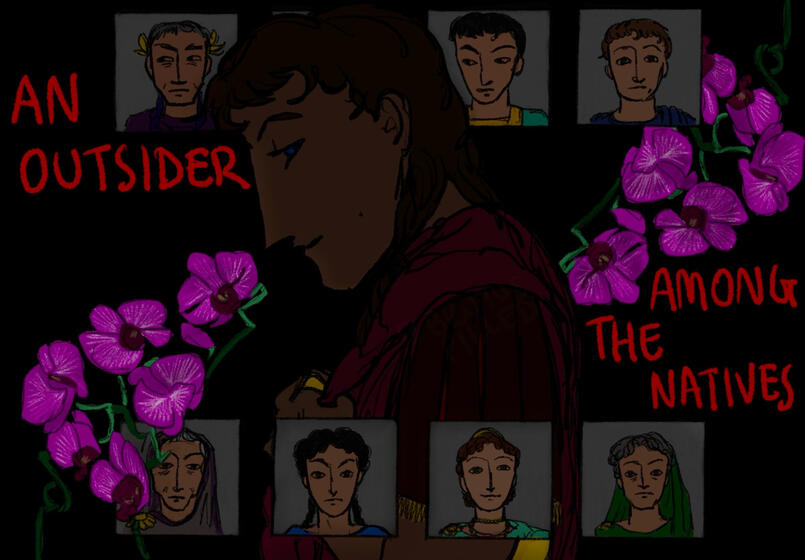
WHO AM I?

My name is Luca (he/him).
I am nineteen (19) years old and I am from Italy. (That's me in the pic by the way!)
I am currently studying classics and have been on this path all the way since highschool.I am a writer and an artist in my free time. I have been working on this ongoing project, "This Charming Man", for over two years.I am thinking about publishing independently, and will probably set up a GoFundMe in the future. Please check it out if you wish to support me!FIND ME:
Instagram: @brutuspilled
Twitter: @brutuspilled
TikTok: @brutuspilled
SYNOPSIS
From AD 4 to AD 31, we will see the events, the plots, the secrets surrounding the Julio-Claudian court through the eyes of Lucius Aelius Seianus, Emperor Tiberius's Praetorian Prefect and protégé.
SOURCES
Cassius Dio, Roman History, Books 57 and 58
McHugh, "Sejanus, Regent of Rome"
G.P.Baker, Tiberius Caesar Emperor of Rome
(more to be listed)
MAIN CHARACTERS
LUCIUS AELIUS SEIANUS
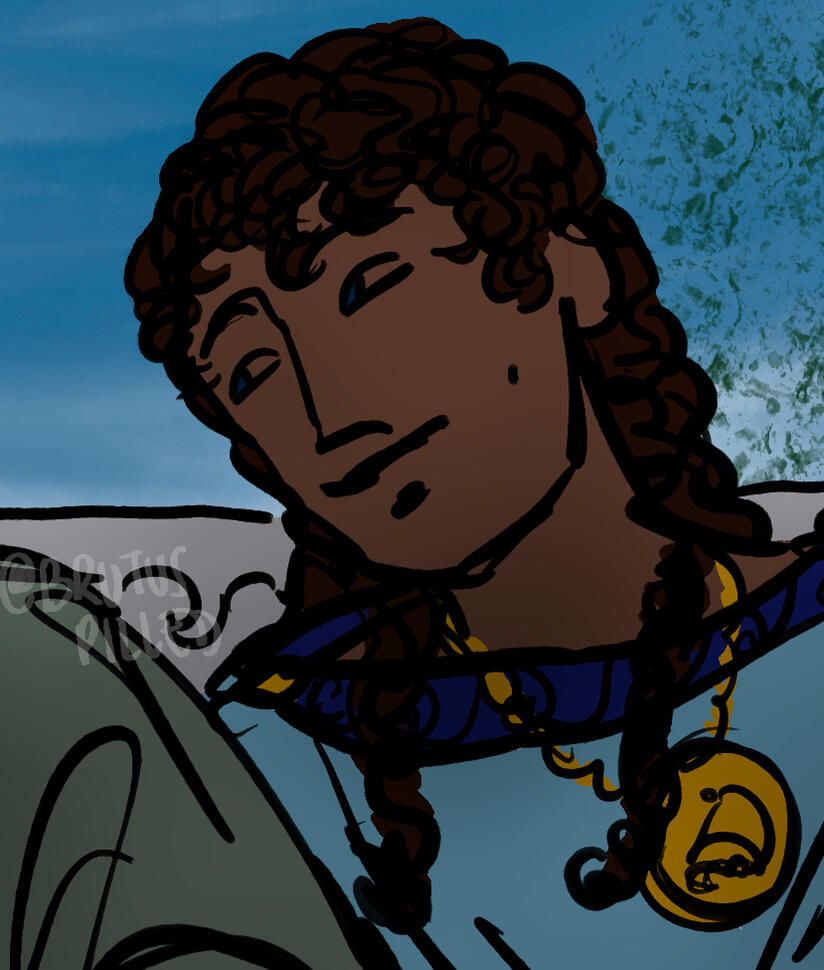
Born in 20 BC in the Etruscan city of Vulsinii, son of Augustus' Prefect, we first meet him in AD 4, when he is 23 years old, and a simple member of Gaius Caesar's entourage, not yet Commander of the Guards.He is a friend of Gaius, Augustus’ grandson and of Livilla, and later of Tiberius, the future Emperor.He is affable and charming, cunning and ambitious. By many he's described as a very capable young man - who doesn't know, however, how to lose himself in his background. Very handsome, he relies heavily on his charm, both in looks and personality.
EMPEROR TIBERIUS
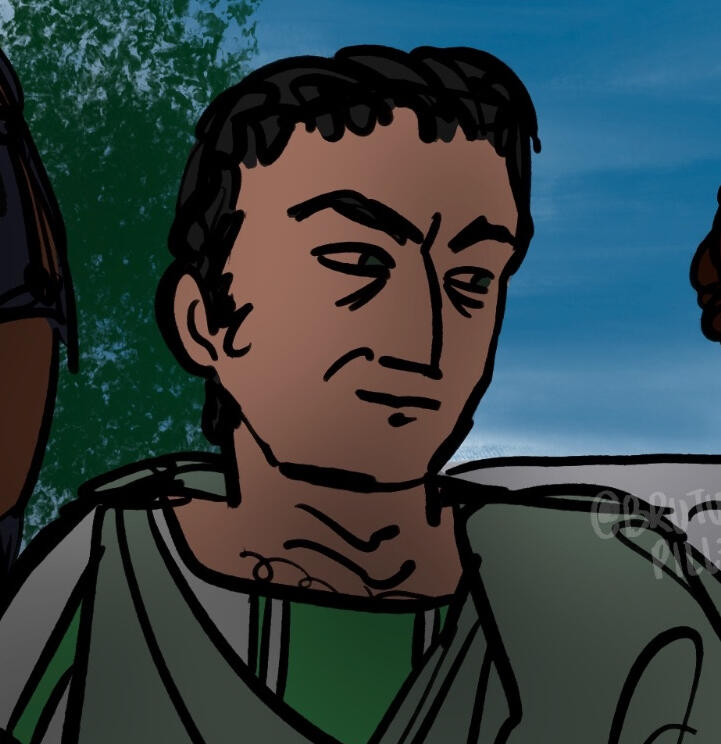
In self-imposed exile for almost a decade, Tiberius is called back to Rome from the island of Rhodes in AD 4, following the sudden death of his stepson Gaius.Upon meeting young Seianus he immediately takes interest in him, and takes him under his wing, keeping him closeWhen we first meet him he is 45 years old. He is a very brooding man and difficult person to interact with: over years, Seianus will become his sole advisor and confidant. He has another close friend, the astrologer Thrasyllus, with whom he shares the interest for the stars.
LIVILLA
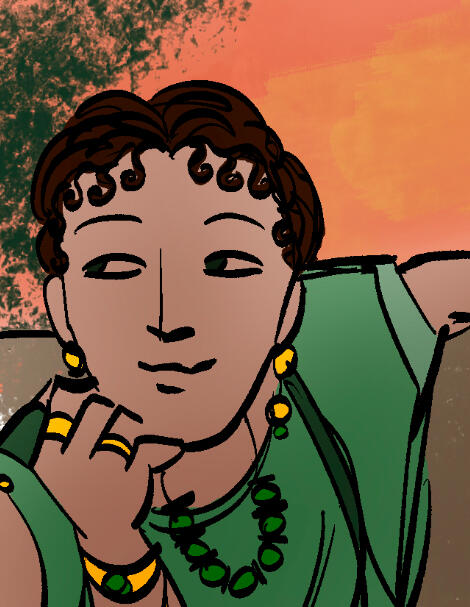
She is the niece of Tiberius and also Castor's wife. She knows Seianus from their earlier days, since she was married to Gaius before his untimely death.Livilla, “little Livia” (Claudia Livia) is a kind woman, turned resolute and distant by an unhappy marriage. Nevertheless she is a caring mother and a devout sister and daughter.Despite barely talking for years, her and Seianus still remain friends, and their bond never fades.She ends up disliking most members of her family because of how they've treated her over the years.
DRUSUS CASTOR
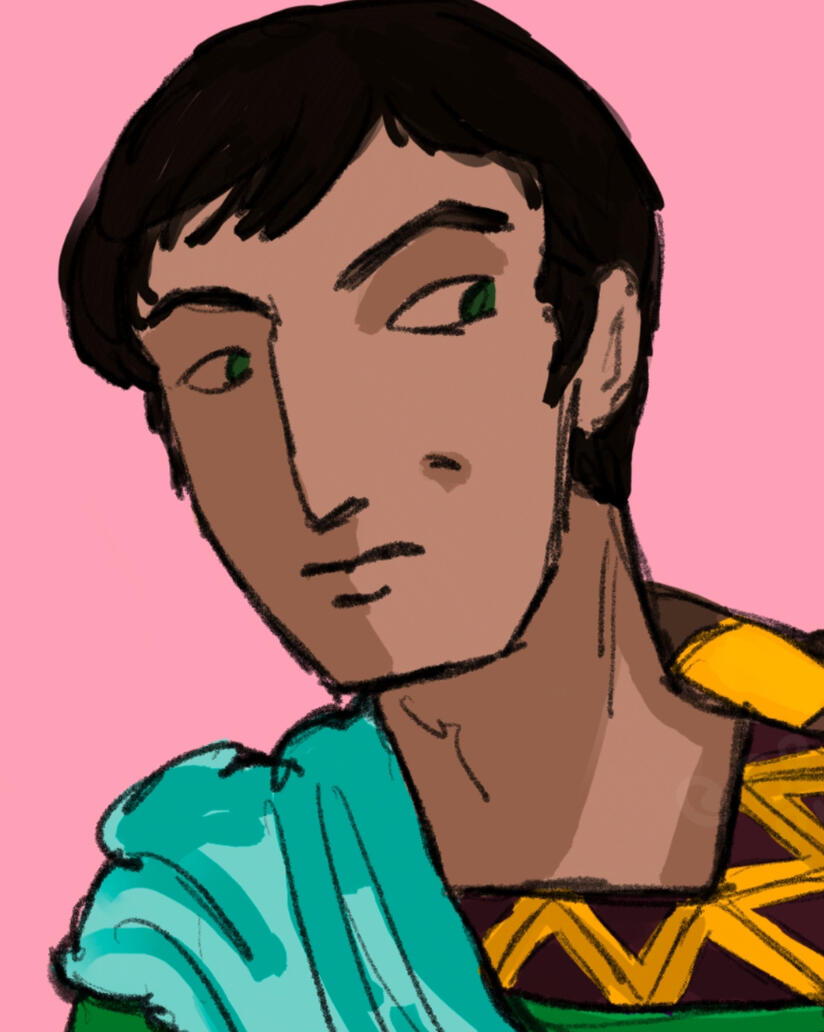
Emperor Tiberius' only son, he mostly grew up without his father. He is not only Livilla’s second husband, but also her first cousin. The marriage was arranged in a rush and neither party was happy.He sees Seianus as an outsider meddling in matters that should be none of his business, a rival in the attention and approval of his father, who has always been very cold and distant towards his family.From a young age he starts to develop a drinking problem, and he is very quick to anger, much like his father himself.
AGRIPPINA THE ELDER
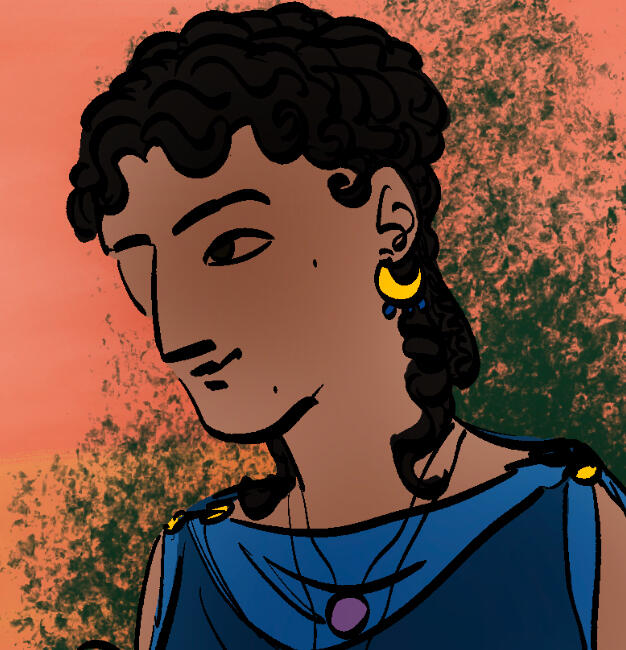
The daughter of Julia and Agrippa, was the step-daughter of Tiberius until he divorced Julia after leaving for Rhodes.She is a very strong woman and the definition of a Roman matron. She follows her husband, Germanicus, in war, and among her children is the future Emperor Caligula.She despises Tiberius for his character, and she wishes for the return of the Republic. In the later years, she will become the leader of a political faction.
READ!
ANNO DOMINI 4
A wooden boat rows to the shore. It cuts slowly the calm, still sea, and one of the three men on board jumps in the water that reaches up to below his knees, making a quiet splash. With a rope, he guides the small vessel to the coast.In a grey tunic, a blonde slave quickly runs down the steep stairs carved in the hillside, pebbles slipping under his feet wrapped in cheap dark cloth. He reaches the visitors as the man steps on dry land, and, between slaves, they speak informally between each other, with a friendly, soft tone: the man with the rope mutters something to the other servant, while the second man gets off the boat, and helps them pull it on the shore. Then, they tie the end of the rope to a nearby pole, positioned just a few steps away from the reach of the gentle waves.“A message, a message for…” are the words the two sailors keep repeating.The slave nods and only then the third passenger stands up, his red sandals on the grey stones, his figure wrapped in a red mantel: a soldier, with his helmet under his arm, hidden by the cloak; a somber look on his face and redness around the eyes. He doesn’t say anything. In one hand, he clutches tight a leather cylinder, in which the message, a parchment, is stored.The blonde looks at him, gently bows his head in a gesture of greeting and respect, and turns on his heels, running up the stairs.Another man, two silver necklaces hanging over his chest, waits for him at the top of the hill, where one of the walls of a villa towers: this one is not a slave, probably a Greek freedman, given the style of his clothes and of his beard. The slave whispers something in his ear, as the three look up at them from the shore, waiting for orders. After giving a nod, the bearded man walks away into the building, and the blonde slaves wave at the sailors to come with him.During the morning and lunch time, the island of Rhodes is scorching and suffocating with relentless sun rays – but at night, when the sun begins to set, and the sea is of the purple-ish colour of wine, a gentle fresh breeze rises, and gives way to nostalgia.The hillside is sheer and hostile: the younger of the three, the soldier, almost slips, but the man behind holds him, a hand on the waist, quickly removed. The red mantel’s hem begins to grey, due to the dust raised by the steps.Reached the top, bushes and flowers grow, and the blonde slave leads them in the marble garden: a table and a bench on the right, another bench on the left – on the first sits the bearded man of before, and on the other another a man, in his forties, clean shaven, for whom the message is for. A servant girl steps away, after giving him a cup of wine, and so does the blonde slave, allowing the newly arrived messenger to introduce himself.“Imperial dispatch from Augustus Caesar,” the soldier announces, saluting, voice loud and clear, one would have not expected it from his somber look. “For the Prince, Tiberius Claudius Nero,” and he, without hesitation, hands him the leather cylinder.Tiberius, who wears a simple white tunic, looks up, brow tense: his eyes are wide and dry, a dark hue of green, greying hair and large nose. He finds, standing before him, a tanned, slim young man, with thick brown hair, short and curly on the forehead, and surprisingly long down his shoulders, parted in four, or maybe more, tight locks, reaching his chest.“An old-fashioned Etruscan, are you?” the older man asks, with a well disguised sneer, recognizing that hairstyle, as he takes the parchment out and rips its imperial seal.“Yes, sir,” the soldier replies, maintaining the same, formal tone. The other glances back up, not expecting an actual answer - then, silent, he begins to read the message.For a split second, he seems to go pale, and the soldier notices, with the corner of his eye, though he stares ahead, at attention. The Greek slightly leans closer, jewelled arms on the table, trying to figure out what news that young man could possibly bring from Rome. Tiberius bites the inside of his lip, something he must do often, since there’s a carved wrinkle on the chin right where he bites. His fingers tighten on the parchment, creasing it. With a contained sigh, let out of his nostrils, he lowers his arms roughly, glancing at his companion, tense.“Gaius is dead,” he proclaims, jaw clenched: he almost sounds annoyed, more than grieved, by the news. “I am to return to Rome.”“Dead?”“Dead.”Silence falls.The Greek rubs his hand on his face and on the beard, eyes wide, probably calculating something - though, what is there to calculate? The parchment is soon rolled up again in the Prince’s big hands and thrown on the table, with a disappointed click of the tongue. The other man reaches for it, opens it, reads it for himself, moving his lips with no sound.“Is your ship going back to Rome tomorrow?”Seemingly not moved at all, the older man turns to the soldier again, while his friend’s eyes scan the words on the scroll, one by one.The young man nods: “Yes sir, before noon. It should’ve dropped anchor at the port by now. We boarded a fisherman's boat to reach you sooner.”Tiberius eyes the Greek, who is still contemplating that sudden message: they slightly nod to each other in understanding, and then the man looks back up.“Then, we’ll join you tomorrow.”The young man bows his head in respect, raises his right arm as a salute, again, and steps back, ready to leave, when the Prince speaks again.“Wait,” and the other does, “I’ve seen your face before: where?”His lips turn into a slight smile, shy. “Maybe, sir,” he replies, cordially, “you’re thinking of my father, Seius Strabo, the Praetorian Prefect; I’m his son, Lucius Seianus.”Tiberius nods, with his hand on his knee, giving him a curious glance. The soldier salutes, and he’s about to leave once more, when again he is stopped by the man’s voice: “Well, where are you going?”Young Seianus turns and walks back the few steps he took.
“I was thinking of joining the other mariners for dinner, at some tavern in the city, sir.”The Prince smiles benevolently. It’s a genuine smile, though his face doesn’t seem to be made for smiles: his is a face sculpted by stern glances and grimaces of irritation. His eyebrows are dark and thick, crowning his large eyes.“Nonsense!” he cuts him off, “I can’t let the son of the Commander of the Guards dine and sleep in some humid, old island tavern, now, can I?”He stands up, revealing his height, taller than the average man, and with his hand he gestures to Seianus to step closer. Tiberius must tower over him by a full head, if not more: he had been like this since youth, it is known, as a boy training in the Field of Mars with his cousins and the sons of senators, he stood taller than anyone else his age. For this reason, he slouched, at times, though now he’d overcome it.“You’ll stay with us for the night – that is, if you please. There’s plenty of room.”The redness under young Seianus’ eyes soon spreads to his cheeks, and he gives a little polite smile, glancing up at him.“I couldn’t thank you enough, sir, for your offer…” he accepts, shyly but firm.As he steps towards the man, Tiberius’ hand pats him on the shoulder, covered by armour and red cloak. If Seianus craned his head slightly up, it’d fit right in the crook of Tiberius’ neck. His hand is large and calloused. With a glance, the Greek orders the slave to show the two sailors out of the premises.They quickly walk in the villa from the gardens. A bearded slave greets them as they step in, but they pay him no mind. Seianus doesn't have much time, or interest, in observing his surroundings, the tiles on the pavement, the frescoes on the walls: he still feels the hand on his shoulder, though it has left for a while now. He glances up at the man every few steps. Each time, he hopes he won’t return the glance.The Greek remained in the garden, after bowing his head to Tiberius, with a knowing little grin under his beard. He called back the servant girl with the jug of wine, and had her pour him a glass up to half.“Before you and your men arrived with the news,” Tiberius sips some water, for a change, from the silver cup, just enough to wet his lips, “I was just thinking of going to the baths, before dinner.”He is sitting on a chair in the corner of the bedroom he led the young man to. Seianus stands not too far from him, near the bed, arms spread, letting a slave unhinge his cloak and cuirass. The room is small, and the walls are painted according to the Greek manner. A curtain, filmy and pale, functions as the door.“We have a wonderful pool here, at the villa.”Hinges come off, and young Seianus’ armour opens, letting him out. He takes a little step forward, straightening the tunic by the hem.“You look like you could use a bath,” Tiberius comments, glancing at the state of the young man’s hands and face, with a tight grin. His eyes catch a glimpse of the embarrassed and grateful smile Seianus gives him, saying something along the lines of, “I wouldn’t want to intrude any further, sir…”, but they’re focused on his figure.The red of the tunic of war suits him unbelievably well, against the light-brown skin, like a proper soldier’s should. His father is darker, and his locks are strong braids that find their roots directly in the skull, but unlike his father, Seianus is more pretty than handsome: he is tall and well-built, yet his lashes are long, his voice soft, when not delivering imperial messages, and he has that shy smile many girls have, that reddens his cheeks and twinkles in his surprisingly blue eyes, like lapis.The slave takes the belt off his waist.“Oh, I’m just trying to not turn your father against me, especially now that I must return to Rome. Don’t want to upset the Praetorian Prefect,” the Prince lets out a short laugh. He’d placed the cup on the small table at his side, and, perhaps unknowingly, slid his fingertip around the edge of it very slowly, lost in thought. “I’ll treat you right.”Young Seianus notices the movement, and the looks he’s getting. They exchange a smile, a different one, and a glance, both can tell the other has more on his mind than what he means with words. After a few more seconds, the Prince stands.They walk together to the baths, escorted by that same slave, who leaves them when they reach their destination. The villa is wonderful, though of course nothing compared to the palace in Rome, where he has been more than once. When the wooden doors with golden handles open, showing the thermae, four slaves, two boys and two girls, dressed modestly and almost identically, begin their work.Red and pink petals float on the fresh, clear water. A mosaic, a giant head of a water nymph – a Nereid – lays at the bottom of the pool. Crickets, and the kind breeze of the evening enters from the colonnade, on one side of the room, while the other three are walled up, decorated with Nymphs, and dolphins, and waves. Not too far from the pool are two cots.The ones to undress them are the two boys, around the young man’s age, if not younger, pale and blondish, probably from Germania, or Gaul. Tiberius must’ve brought them with him when he left Rome almost a decade earlier. Soon, the clothes are off.Tiberius is the first to get in the water, fixing one arm over the edge, reaching for yet another cup brought to him by one of the girls. This one and the other are, evidently, Greek, with tanned skin and thick, dark hair. Young Seianus follows him. His hair curls down, over his naked chest and shoulders, and he is simply wonderful, there are no other words that come to Tiberius’ mind.He steps in the pool, keeping a respectful distance, as if he went there alone. It wasn’t his first time sharing a bath with another man, and it was not unusual, but, still…That makes Tiberius chuckle.“Don't be shy, Seianus,” he says, bringing the glass to his lips, “let Calliope get you some wine,” he adds, and with a gesture of the head he orders the slave girl to go get another cup.Seianus smiles to him, and to himself, and reaches Tiberius quickly, but with calm. His feet are well planted on the floor, for it gets deeper towards the centre of the pool, and now he’s right by its edge. The other man’s chest is almost fully out of the water. He’s flat and large in shoulders, and does not yet have that belly most middle aged men carry. It’s evident he exercises a lot, not much in order to remain in shape but more out of habit. He’s lightly tanned, which proves Seianus’ observation correct. This morning even, maybe, he might’ve wrestled with a bulkier slave, or with that Greek of before.“Do you like to drink?” Tiberius asks, as the wine pours in Seianus’ glass.The young man lifts his shoulders a bit, blinking his eyes away from the man.“I try to not get drunk.”Tiberius grins. “That’s good, that’s good,” he raises his own cup as Seianus brings his to his lips. Not watered, the wine is sour and strong in the nose and throat, and the young man only takes a small sip.After some silence, perhaps a bit awkward, Tiberius groans and sighs loudly, his arms spread over the edge of the pool, his back against it.“Tragic, tragic loss,” he shakes his head, “Lucius first, then Iulia exiled - finally,” and in that word something stirs, “Gaius is gone, too…”He eyes Seianus and the other glances back at him through his eyelashes, holding the cup with both hands. The water reaches his upper chest, just over the small nipples. His chest is bare of any hair, and it doesn’t carry any sign indicating that he might pluck each hair out. His wet skin seems even smoother, and his blue eyes stare at him intently. It seems he’s overcome his shyness just a little.
It finally clicks.“You were part of Gaius’ entourage in Syria, weren’t you?” Tiberius asks.“I was there also in Armenia.” Young Seianus replies, after a second his silence. “I was there when he died,”Another drink.“Then, that's where I know you, from the island of Samos,”A humiliating spectacle, Samos - years ago, when Tiberius moved to Rhodes, he met with Gaius his step-son: the rivalry between Tiberius and Lollius, Gaius’ mentor, made the meeting even more tense; and Tiberius, caught by surprise from the attitudes given to him, left distraught and embarrassed. That would’ve been the last time step-father and step-son saw each other.Seianus was there, yes: a simple staff officer, but also Gaius’ closest friend. They were the same age, and had met as children, in the court, introduced by the adults around them. Brought up in the palace and its premises, thanks to his father being Praetorian Prefect and personal friend of Augustus, as a boy, Seianus played in the gardens with the imperial children, Gaius, most importantly. Quickly, a bond had formed, and he cultivated it with care well into their puberty, and as young men, they left together first to the Danube, and then to Syria, Parthia, Armenia, Lycia, all close throughout the years.In that room, during that cold reception, behind eighteen-year-old Gaius, at attention and with a hand on the sword’s hilt, eighteen-year-old Seianus stood.“Do you not recall it?”Seianus nods slowly, “I do,”“Then, when I asked you earlier, why didn't you say so?”The young man crosses his arms, the cup hovers near his lips, he smiles just a little: he drinks.Despite having a guest, Tiberius had the cook prepare a simple meal, nothing too heavy, to ease the travel by the sea the following day, to avoid anybody getting seasick because of a stomach too full.